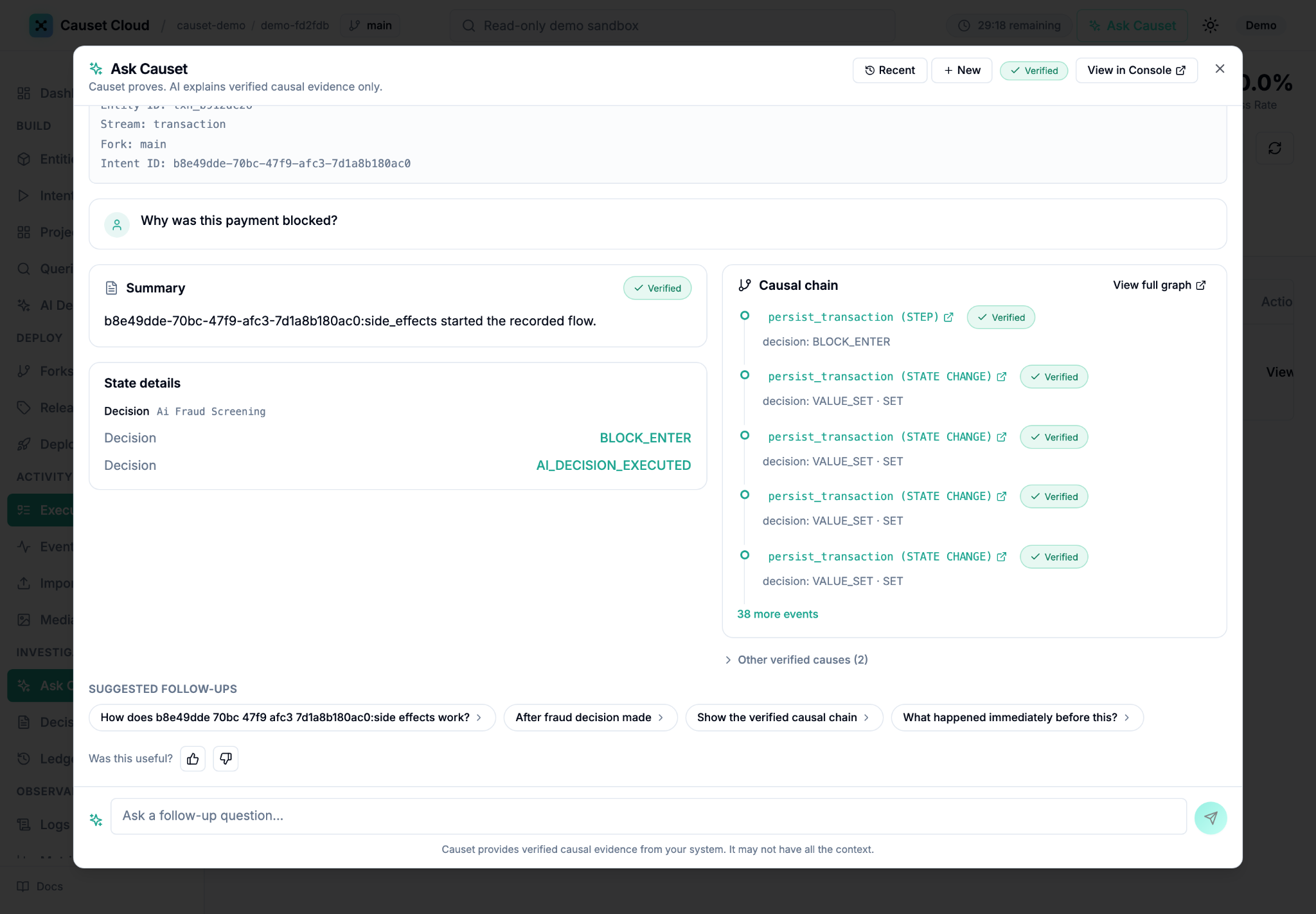
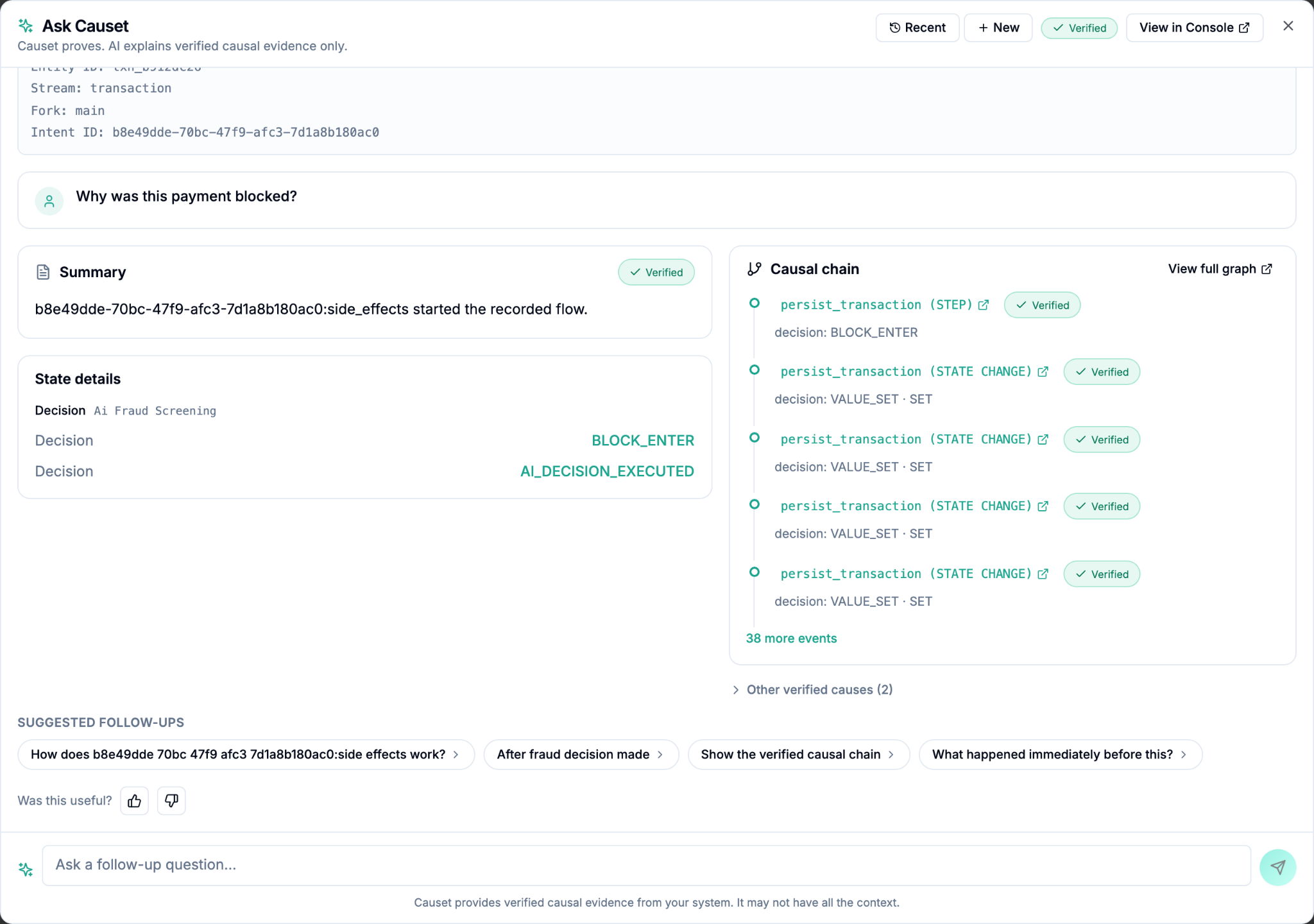
Inspect · replay · fork · repair · audit

Causet turns fragile workflows into replayable timelines.

Move one endpoint, webhook, background job, or AI agent action into Causet. Get a deterministic timeline you can inspect, replay, fork, repair, and audit, without rewriting your app.

Works for existing backend workflows and AI agents. Causet is a deterministic runtime for state, events, intents, projections, replay, and repair.

Browser tutorial + CLI available now · Cloud early access · Self-hosting coming soon

Existing apps Background jobs AI agent actions Cloud early access
Start here

What you can do today

Try the browser tutorial, install the CLI, validate and compile a .causet model, and request Cloud early access for live runtime workflows.

Public Docker/self-hosted runtime and outbound HTTP webhook delivery are coming soon.

View product status
Why not logs?
Logs tell you what code said. Causet shows how state changed.
Logs are scattered across services. Causet records the workflow timeline: the intent, events, failed step, retry, projection update, and final state.
The workflow story

Same endpoint. Clearer state.

When something fails mid-flow, logs scatter across services. Causet keeps one timeline of what changed.

Before Causet

Fragile, scattered, unclear

  1. Endpoint mutates the app database
  2. Queue, job, webhook, or service runs somewhere else
  3. A downstream step fails
  4. Logs are scattered
  5. Current state is unclear
  6. Retrying safely is hard
After Causet

Intent in. Timeline out.

  1. Endpoint submits an intent to Causet
  2. Causet records meaningful events
  3. Timeline shows what happened
  4. Failed step can be inspected
  5. Replay, fork, or repair through Cloud early access
  6. Existing app stays compatible
Debug the workflow

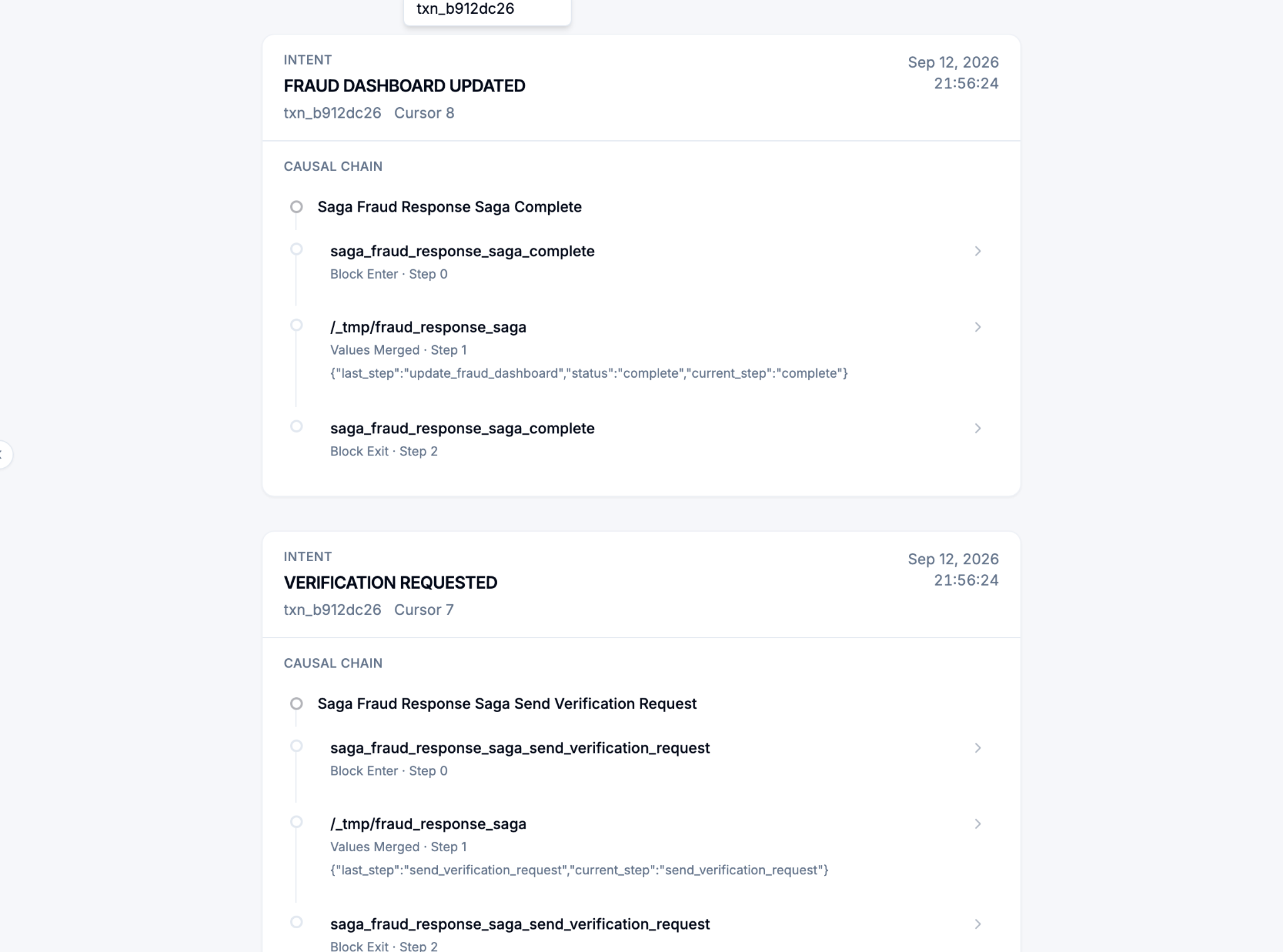
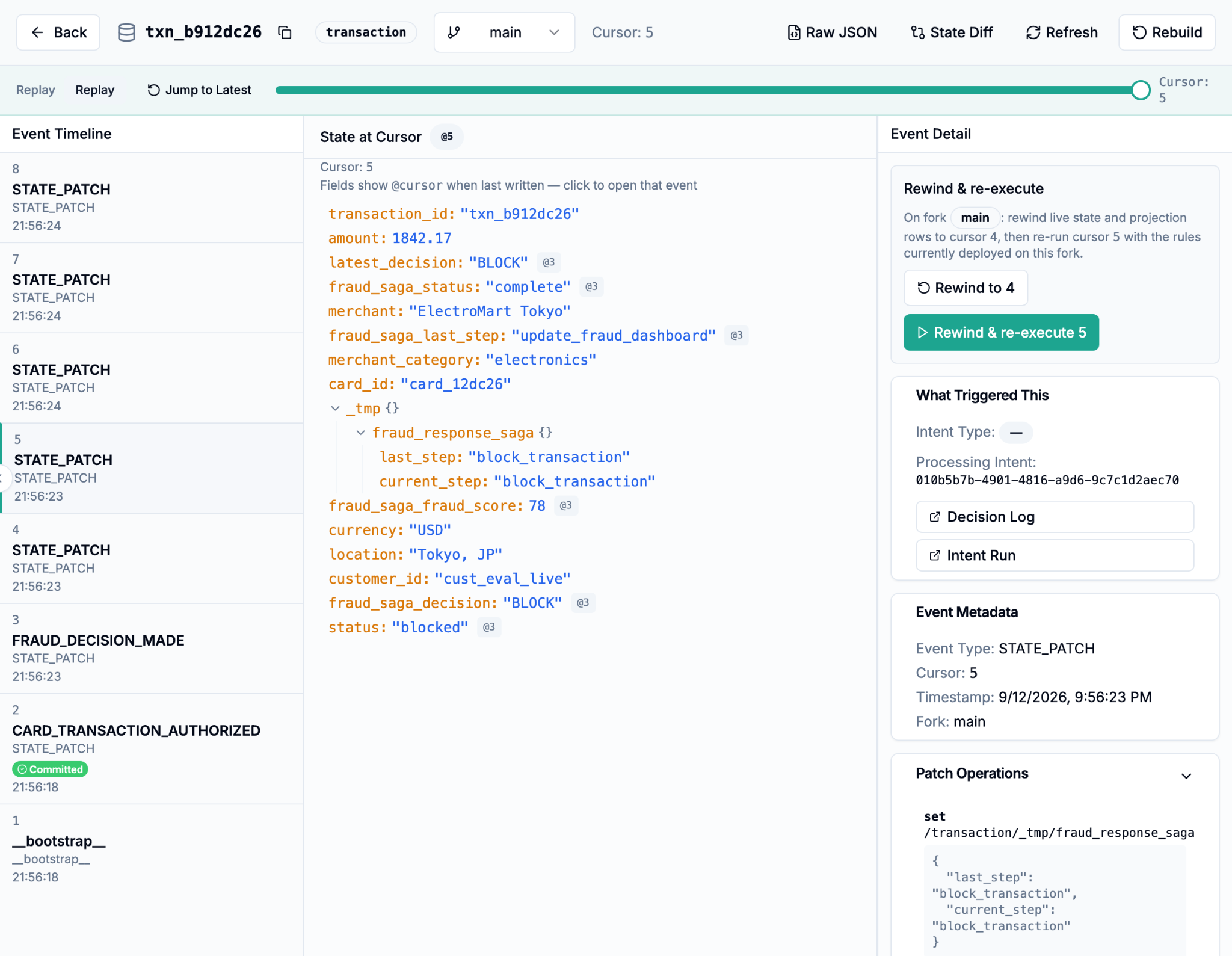
A workflow timeline you can actually debug

Instead of searching logs across services, Causet shows the state history of the workflow: the intent, emitted events, failed step, retry, and projection updates.

timeline · access_request_482 · mock
Intent submitted request_access
Event recorded access_requested
Event recorded approval_required
Event recorded access_approved
Step failed notification_sent
Retry scheduled send_notification
Projection updated access_request.status = approved

Replay, fork, and repair actions are available in Cloud early access. Public self-hosted runtime support is coming soon.

No rewrite required

Adopt Causet one workflow at a time

You do not need a rewrite. Keep your frontend, database, queues, services, and domain model. Start with one fragile endpoint, webhook, background job, or agent action. Causet becomes the replayable timeline for the state transitions that matter.

Keep the existing API contract

Your routes and response shapes stay the same.

Keep the existing database

Use it as the app-facing read model while Causet records the timeline.

Submit an intent when the workflow starts

Validate in your endpoint, then hand the fragile work to Causet.

Record important state changes as events

Make approvals, failures, and side effects visible on one timeline.

Sync state back with projections

Use projections or webhook-style updates so your app stays in sync. Outbound HTTP webhook delivery is coming soon.

Inspect the timeline when something fails

Move more workflows over when the pattern proves useful. Replay, fork, and repair are available in Cloud early access.

Causet does not replace your database, queue, frontend, services, vector DB, or observability stack. Learn what Causet handles →

Webhooks

Fit existing apps. Be honest about delivery.

Causet is designed to fit existing apps through webhook-style updates and projections. Your app can keep reading from its existing database while Causet records the workflow timeline.

Inbound webhook pattern

Documented today. Keep the webhook URL, verify the signature, submit an intent, and return quickly. Causet owns the downstream workflow timeline.

Outbound HTTP webhook delivery

Coming soon. Until then, sync state back with projections or your existing app-side update paths.

Where Causet fits

Causet sits beside your application, not inside it.

Causet does not replace your frontend, database, queue, vector store, or services. It records the workflow and state timeline around the operations that need inspect, replay, fork, or repair.

Your app keeps
  • Frontend
  • API routes
  • Auth / session
  • Database
  • Queue
  • Vector DB
  • Third-party services
  • Existing domain model
Causet handles
  • Accepted intents
  • State transitions
  • Workflow timelines
  • Decisions and approvals
  • Replay / fork / repair metadata
  • Retryable steps
  • Audit history
  • Derived projections when configured
AI is additive

AI is not the only use case. It is the sharpest version of the problem.

Causet is useful anywhere state changes matter. AI agents make the problem sharper because their decisions, memory, tool calls, approvals, and side effects need to be inspectable.

A replayable state timeline for backend workflows and AI-driven systems.

01

Backend workflows already need this

Payments, onboarding, webhooks, and jobs fail in the gaps between services. A timeline beats scattered logs.

02

Agents add more state to explain

Memory, tool calls, decisions, approvals, and emitted events all need provenance, not just retrieval.

03

Same model for both

Intent → events → projections → inspect / fork / replay / repair. Whether a human, job, or agent started it.

Trust

What Causet is, and is not

Clear boundaries reduce adoption risk. Causet is a timeline layer, not a stack replacement.

Causet is not

  • a database replacement
  • a queue replacement
  • a frontend framework
  • a vector database
  • an observability dashboard only
  • a generic workflow builder
  • a black-box AI agent framework

Causet is

  • a deterministic state runtime
  • a timeline for important workflow events
  • a compiler for defining states, events, intents, and queries
  • an early-access replay / fork / repair layer
  • a bridge between existing apps and auditable async systems
Concrete examples

Every claim, backed by a workflow.

Old fragile flow → Causet version → what you can inspect. Replay, fork, and repair are available in Cloud early access.

Payment dispute workflow

Old fragile flow

Chargeback webhook updates DB, emails ops, opens a ticket, and syncs finance. Retries live in route code.

Causet version

Webhook submits RECORD_DISPUTE. Causet records status, notifications, and finance projection updates.

Timeline events

DISPUTE_OPENEDEVIDENCE_REQUESTEDOPS_NOTIFIEDFINANCE_SYNCED

Inspect / repair

See which step failed. In Cloud early access, fork before a bad sync and replay with corrected dispute metadata.

Access request workflow

Old fragile flow

Form handler inserts a lead, sends email, pings Slack, and syncs CRM inline.

Causet version

Keep POST /api/request-access. Validate, submit intent, return quickly.

Timeline events

LEAD_CREATEDWELCOME_EMAIL_SENTSALES_NOTIFIEDCRM_SYNCED

Inspect / repair

Audit who was notified and when. Retry a failed CRM sync without re-sending email in Cloud early access.

Support ticket escalation

Old fragile flow

Agent or rule escalates in code; Slack, CRM, and SLA timers update in separate places.

Causet version

Escalation is an intent. Policy check, human approval, and side effects land on one timeline.

Timeline events

TICKET_ESCALATEDPOLICY_CHECKEDHUMAN_APPROVEDSLA_TIMER_SET

Inspect / repair

Explain why escalation fired. Fork and replay with corrected policy input in Cloud early access.

Webhook ingestion and retry

Old fragile flow

Provider webhook does five downstream calls. Timeouts and duplicate deliveries hide in the handler.

Causet version

Verify signature, normalize payload, submit intent with an idempotency key, return 2xx.

Timeline events

WEBHOOK_ACCEPTEDSTATE_UPDATEDSIDE_EFFECT_FAILEDRETRY_SCHEDULED

Status note

Inbound webhook pattern is documented today. Outbound HTTP webhook delivery is coming soon.

AI agent decision with memory

Old fragile flow

Agent retrieves context, calls tools, and updates systems. Memory and decisions are opaque.

Causet version

Record memory used, decision output, tool call, approval, and emitted business event on one timeline.

Timeline events

MEMORY_RETRIEVEDDECISION_EVALUATEDTOOL_CALLEDREFUND_ISSUED

Inspect / repair

See which memory shaped the decision. Replay with corrected context in Cloud early access.

Existing app retrofit

Old fragile flow

One endpoint owns validation, DB writes, emails, CRM, and retries. Hard to debug in production.

Causet version

Keep the endpoint and frontend. Submit an intent. Move fragile downstream state into Causet.

Timeline events

INTENT_ACCEPTED → domain events → side effects → projection updates

Inspect / repair

Adopt one workflow at a time. Expand only where replay and audit matter.

How it works

Define the state changes. Causet records the timeline.

You keep your existing services and database. Causet sits beside your application for the workflows and agent actions that need inspect, fork, replay, and repair.

01Intent

A user, webhook, job, or agent asks for something to happen.

02Rules

Logic decides which events and decisions are valid.

03Events

State changes become durable facts in the timeline.

04Decisions

AI output, rule results, and approvals are recorded with context.

05Projections

Readable views are built from the event ledger.

06Replay

Re-run timelines in Cloud early access to verify corrections.

07Fork

Branch state before a mistake in Cloud early access.

Positioning
Validate locally. Run in Cloud early access. Self-hosting coming soon.
Add Causet beside your database, queue, vector store, and observability stack. What Causet handles →
Developer experience

Validate locally. Run in Cloud early access. Self-hosting coming soon.

Use the browser tutorial to learn Causet without an account. Use the CLI to validate and compile .causet models locally. For live runtimes, Causet Cloud is available in early access. Public Docker and self-hosted runtime support are coming soon.

  • Validate .causet models locally with the CLI.
  • Compile DSL to IR locally.
  • Try browser tutorials without signup.
  • Request Cloud early access for live runtime workflows.
  • Public Docker/self-hosted runtime support is coming soon.
  • Outbound HTTP webhook delivery is coming soon.
Product readiness

What runs today?

Conservative labels. No overclaims. Full detail lives in the docs.

Capability Status Notes
Browser tutorial Available now Learn Causet in-browser. No install
CLI validate Available now causet build validate: fully local
CLI compile Available now causet build compile: fully local
Managed Cloud Early access Live runtime for approved accounts
SDK packages Preview Typed clients; public package publish in progress
Timeline inspector Early access Available against Cloud early-access runtimes
Replay / fork / repair Early access Supported in early-access runtimes
Inbound webhook pattern Documented Verify, submit intent, return quickly
Outbound HTTP webhook delivery Coming soon Not generally available yet
Local runtime / Docker Coming soon Public Docker Compose stack not yet released
Self-hosting Coming soon Public self-hosted runtime support not ready

Details: What runs today · Install Causet · Roadmap

FAQ

Questions teams ask first.

What is Causet?

Causet turns fragile workflows into replayable timelines. You add it beside your existing app to record intents, events, decisions, and state transitions so teams can inspect, replay, fork, repair, and audit how important flows changed.

Do I need to rewrite my app?

No. Keep your frontend, database, queues, and services. Start by wrapping one fragile endpoint, webhook, background job, or agent action.

Is Causet only for AI?

No. Causet is useful anywhere state changes matter. AI agents are the sharpest version of the same problem: decisions, memory, tool calls, and side effects need to be inspectable. Backend workflows and agents share the same timeline model.

Can I run Causet locally with Docker today?

No. Public Docker and self-hosted runtime support are coming soon. Today you can use the browser tutorial and CLI validate/compile locally, then request Cloud early access for live runtimes.

Does Causet send outbound HTTP webhooks today?

Not yet. Outbound HTTP webhook delivery is coming soon. Inbound webhook patterns for existing apps are documented today, and projections can sync state back to your app.

Does Causet replace my database?

No. You keep your existing database. Causet sits beside your application as the timeline layer for flows where correctness, auditability, and repair matter.

What can I use today?

Browser tutorial and CLI validate/compile are available now. Managed Cloud, timeline inspector, and replay/fork/repair are early access. SDK packages are preview. Local runtime/Docker, self-hosting, and outbound HTTP webhook delivery are coming soon. See What runs today?

Where should a team start?

Keep your app. Pick one endpoint, webhook, background job, or AI agent action. Start with the browser tutorial or the retrofit guide.

Build systems you can replay

Keep your app. Move one fragile flow into Causet.

Turn hidden workflow logic into a replayable timeline. Browser tutorial + CLI available now. Cloud early access. Self-hosting coming soon.